

Moter Diagnostics
Laboratory for molecular infectious disease diagnostics
Molecular Detection of Bacteria and Fungi
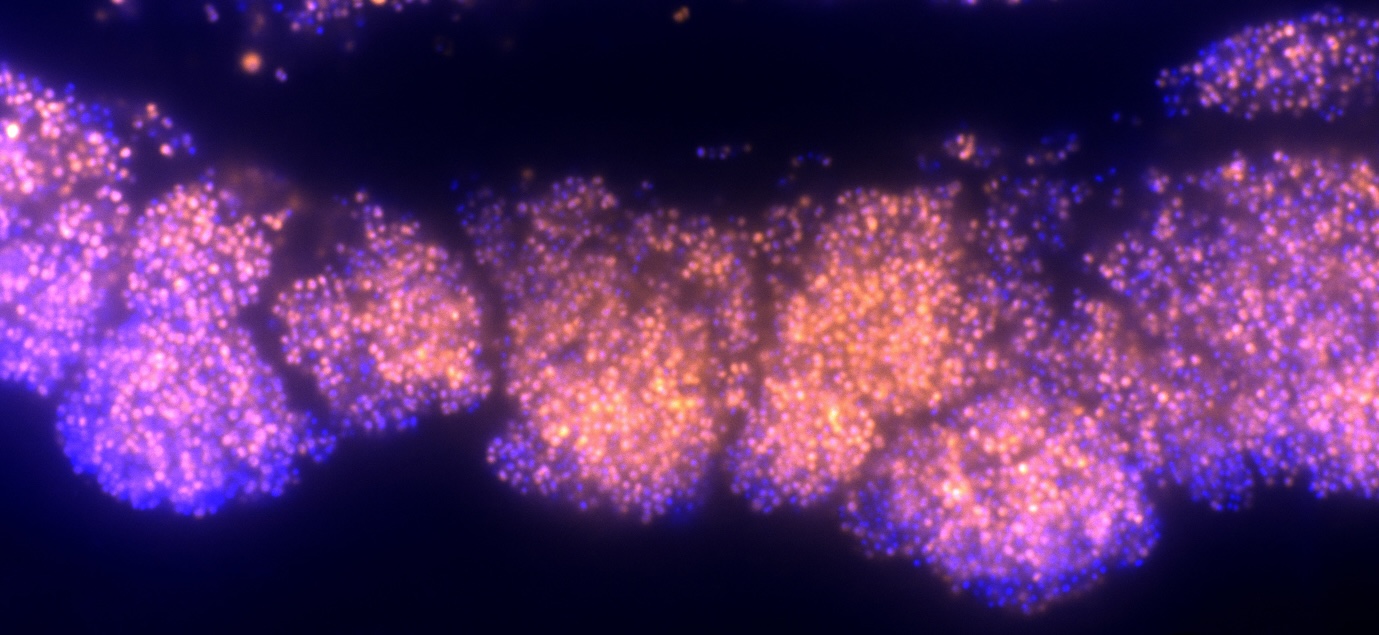
To detect microorganisms in clinical samples, we combine molecular and microscopic methods. Using fluorescence in situ hybridization (FISH) and PCR amplification of the 16S rRNA gene, bacteria — including those in culture-negative cases — can be directly detected and visualized in the sample.
FISH is a microscopic method that combines the advantages of molecular biology, fluorescence microscopy, and histology. It uses fluorescently labeled probes that bind sequence-specifically to the ribosomal RNA (rRNA) of microorganisms, allowing bacteria and fungi to be detected and visualized at the genus or species level under the microscope. For example, probes can target all bacteria, all Staphylococci, or specifically Staphylococcus aureus. FISH also measures the residual activity of microorganisms based on ribosome content at the single-cell level. This enables visualization and identification of microorganisms in the tissue context, as well as quantification of their number, location, and activity. For sequencing, specific regions of the microorganisms’ genetic material (e.g., parts of the 16S rRNA gene) are first amplified using PCR (Polymerase Chain Reaction). In mono-species infections, the identity of the microorganisms is then determined through Sanger sequencing.
Microbiome analyses examine the entire community of microorganisms within a sample. The process involves several steps, including DNA extraction, amplification, barcoding, and Next-Generation Sequencing, followed by bioinformatic analysis. This approach is particularly suitable for mixed cultures or samples containing multiple microorganisms, such as mixed biofilms. We offer this analysis in combination with FISH to spatially visualize microbial communities within the tissue context and to help rule out contamination.
qPCR is a highly sensitive method for the specific detection of microbial nucleic acids. In addition to qualitative detection, it allows precise quantification of pathogen load in clinical samples. This provides valuable information for diagnosis, therapy monitoring, and tracking the course of infections. The method is characterized by high sensitivity, high specificity, and rapid turnaround times.
We advance infectious disease diagnostics through a variety of research projects.